Jordan: Unrwa salary cuts raise fear of agency’s ‘dismantling’
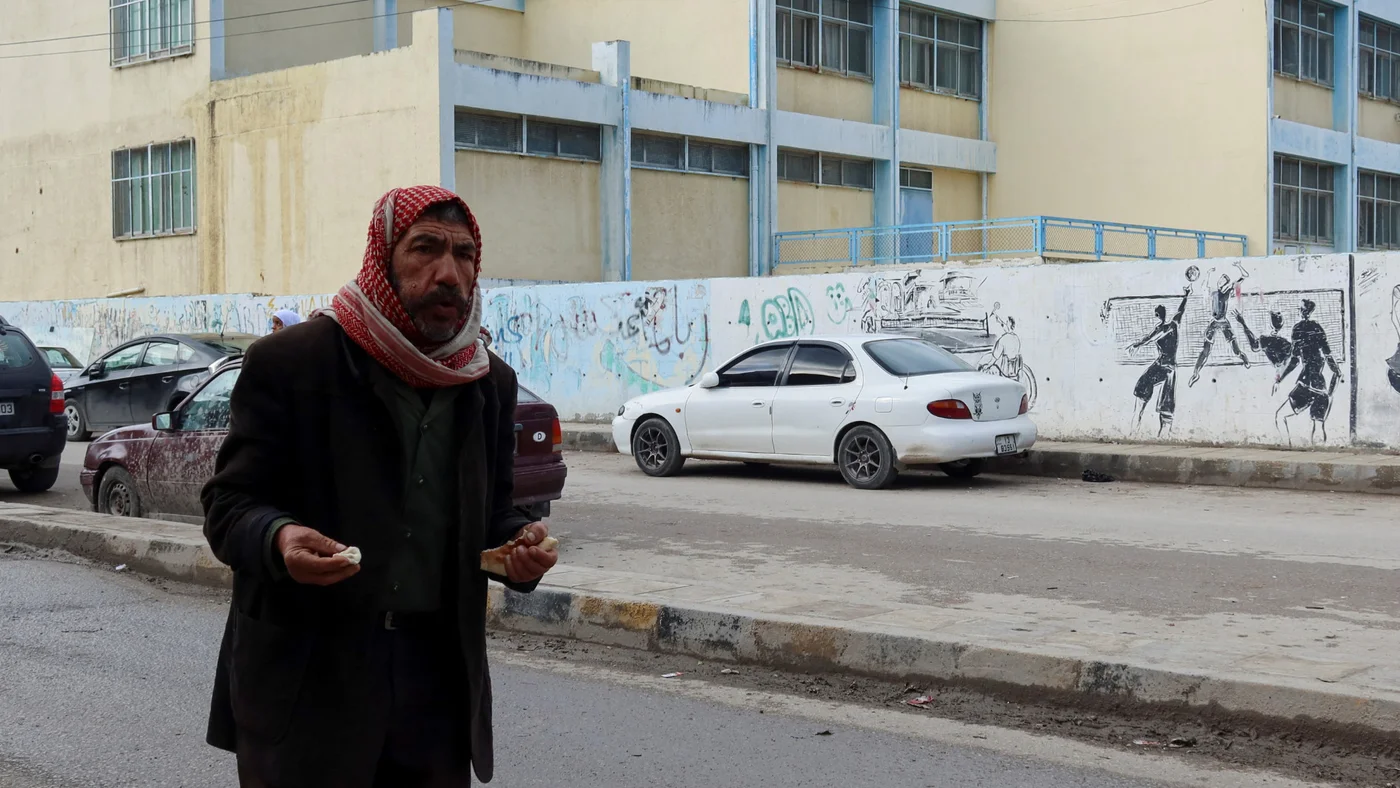
It was not an easy decision for Manal* to remove her two children from Unrwa’s health insurance. But it was a necessary one. Faced with a widening hole in her family’s budget, the English teacher at an Unrwa school in Jordan made a stark calculation: cut health cover or sink deeper into debt.
Every day now feels like a numbers game.
Last month, Unrwa – the UN agency for Palestinian refugees – cut salaries and working hours by 20 percent, as part of austerity measures that also saw hundreds of staff dismissed.
For Manal, that meant losing about $280 from her monthly income of roughly $1,400.
Cancelling her children’s health insurance saved her $84, but left her in constant fear of what might happen if they fall ill.
New MEE newsletter: Jerusalem Dispatch
Sign up to get the latest insights and analysis on Israel-Palestine, alongside Turkey Unpacked and other MEE newsletters
With much of her salary already going towards bank loans and rent, the pay cut has only deepened her financial strain.
“We are not talking about luxuries. We are talking about securing milk and bread,” Manal told Middle East Eye.
“The deduction has left us with no choice but to sacrifice our children’s health security just to feed them today,” the single mother of three added.
“Loans, rising prices – everything is weighing on Unrwa employees.”
Staff say they now fear further cuts, including to savings and end-of-service benefits.
Since the start of February, reduced working hours and salary cuts have taken effect across all of Unrwa’s fields of operation.
The agency says it faces a $200m funding gap and described the move as a “last resort” to avoid collapse.
According to Unrwa Commissioner-General Philippe Lazzarini, weekly hours for thousands of local staff were reduced in line with the lower pay.
But teachers in Jordan told MEE the cuts have created a financial shock that many families simply cannot absorb.
Financial crisis
Established in 1949 by a UN General Assembly resolution, Unrwa was mandated to provide essential services to Palestinian refugees across the Near East.
The agency operates in five areas – Jordan, Lebanon, Syria, the West Bank (including East Jerusalem) and the Gaza Strip – serving nearly six million registered refugees.
It relies on voluntary contributions from member states and coordinates with local authorities to deliver education, healthcare and social services.
Unrwa employs more than 30,000 staff, most of them Palestinian refugees. Since the start of the genocide in Gaza in 2023, the agency has faced an intense Israeli campaign calling for its closure.
Israeli forces have killed more than 380 Unrwa employees during the war, suspended its operations in parts of Gaza and the occupied West Bank, and most recently demolished its headquarters in occupied East Jerusalem.
The pressure has coincided with significant donor funding cuts, pushing the agency to the brink of financial collapse.
In Jordan, many Palestinian refugees view the financial squeeze as part of a broader effort to dismantle Unrwa and undermine the right of return for refugees and their descendants expelled in 1948.
Azzam Abu Khalid, 67, who lives in Husn camp and relies on Unrwa services, says the agency represents more than assistance.
“Unrwa is a lifeline for Palestinian refugees,” he told MEE.
“Its role is not limited to education and health services; it has become part of our identity and our cause. It stands as international recognition of our displacement and of our right of return.”
He accused Israel of seeking to erase that symbol through military attacks and financial pressure.
According to Abu Khalid, services are already shrinking in his camp. Classrooms are overcrowded, with up to 40 students per class, and patients at clinics face long queues – worsened after Saturday was removed from the working week.
Education and health services threatened
Kazem Ayesh, head of the Jordanian Society for Return and Refugees, shares the same concerns.
The former head of the Unrwa workers’ union sees the cuts not as mere financial austerity, but as the “beginning of the actual dismantling” of the agency.
“Reducing salaries and working hours is designed to create an environment that pushes refugees to leave Unrwa institutions and rely on Jordanian government services,” he said.
“This effectively erases the title of ‘refugee’ and undermines the right of return guaranteed under UN Resolution 194.”
Ayesh criticised the current Unrwa administration, describing its approach as “complicit” with international pressure. He noted that the agency has weathered far more severe financial crises in the past without impacting its employees’ livelihoods.
He warned that employees may eventually resort to an “open-ended strike” to defend both their livelihoods and the agency’s survival.
The Jordanian Unrwa workers’ union has previously hinted that strikes could be an option, citing the wide-reaching effects of austerity on education and health services.
The union warned that the cuts to hours and salaries “will inevitably lead to the collapse of the educational sector”.
It said lesson hours would be reduced, 200 jobs eliminated, and overcrowding in classrooms worsened, with some classes potentially closed entirely.
Health services would also be paralysed, the union added, with clinics and health centres closed on Saturdays and working hours reduced, putting thousands of patients at risk.
The measures would further deprive around 60,000 refugees of periodic cash assistance, draining a critical lifeline for their families.
For the Jordanian government, a collapse of Unrwa services would be unwelcome. The government, which has long supported Unrwa, views the agency as a major political institution backing the Palestinian right of return.
A government source, speaking on condition of anonymity, told MEE that “Jordan repeatedly confronted attempts to liquidate Unrwa”, especially in 2018 under the previous US administration of Donald Trump, when the agency faced budget deficits.
‘Difficult decision’
Unrwa spokesperson Jonathan Fowler said the agency’s “difficult decision” came after exhaustive financial modelling and was taken only as an “emergency attempt” to prevent total collapse.
“Protecting jobs while preserving core services was a key priority in shaping this decision,” Fowler told MEE.
He explained that the agency was fully aware of the significant impact on staff and their families. But he stressed that the alternative would have been far worse, potentially causing a complete halt to essential services and mass layoffs.
Despite major austerity measures throughout 2024 and 2025, Fowler said Unrwa entered 2026 with a cash-flow shortfall exceeding $220m.
He attributed the crisis mainly to the suspension of funding by two major donors in 2024, which accounted for nearly a third of the budget used to pay national staff.
“This measure was taken only because Unrwa is facing an unprecedented funding crisis at a time when needs among Palestinian refugees are surging,” Fowler said, adding that the reduction in hours is a “temporary” step driven by necessity, not choice.
While Unrwa is engaged in high-level talks with donors to restore financial stability, Fowler described the global funding landscape as “bleak”, noting that donor support remains the key factor in returning services and salaries to previous levels.
* Name changed due to the teacher not being authorised to speak publicly